
☰

NRI
North American Rebrand + ABM Campaign
North American Rebrand + ABM Campaign
The Setup
NRI is one of the largest technology consulting firms in the world. $5B globally and the second-largest consultancy in Japan. When they acquired Core BTS and set their sights on North America, their second-largest market outside Japan, they faced a challenge few firms navigate well.
How do you honor a powerful parent brand while building a voice that actually resonates with American buyers? How do you bridge two cultures, two markets, and two ways of doing business without losing either one?
The Ask
NRI works with agencies around the world.
After two years of brand and campaign work that earned their trust and put the North American business in a strong position, they tapped JumpSeat to lead the full US rebrand. The mandate was to build a differentiated market identity that bridged the cultural gap between a globally recognized Japanese firm and a North American buyer base that needed to see themselves in the story.
The Work
The central challenge of the NRI rebrand was not creative. It was philosophical.
Technology in its raw state is clunky, messy, and hard. It took fifty years of iteration, failure, and refinement to get AI to where it is today. Most organizations encounter technology long before it is ready for them. Long before they are ready for it.
That gap between what technology is capable of and what organizations can actually use is where NRI does its best work. It is also the insight that became the foundation of everything JumpSeat built.
The work began with a positioning strategy.
Before any creative direction was explored, JumpSeat mapped the full landscape of how NRI could stand out. Ten positioning approaches ranging from practical to emotional: price, vertical specialization, outcome ownership, technology, experience, vision-led, social responsibility, partnerships, and metaphor. Each was evaluated against the brand’s strengths, the competitive landscape, and what the North American market needed to hear.
From that mapping, JumpSeat identified the zone where NRI had the most credible right to win: a hybrid of outcome and experience positioning. Three distinct creative directions were built from there. The direction chosen was Crafted with Purpose. Driven by Impact. From that direction, JumpSeat built the full brand foundation. The brand narrative that became the heart of everything:
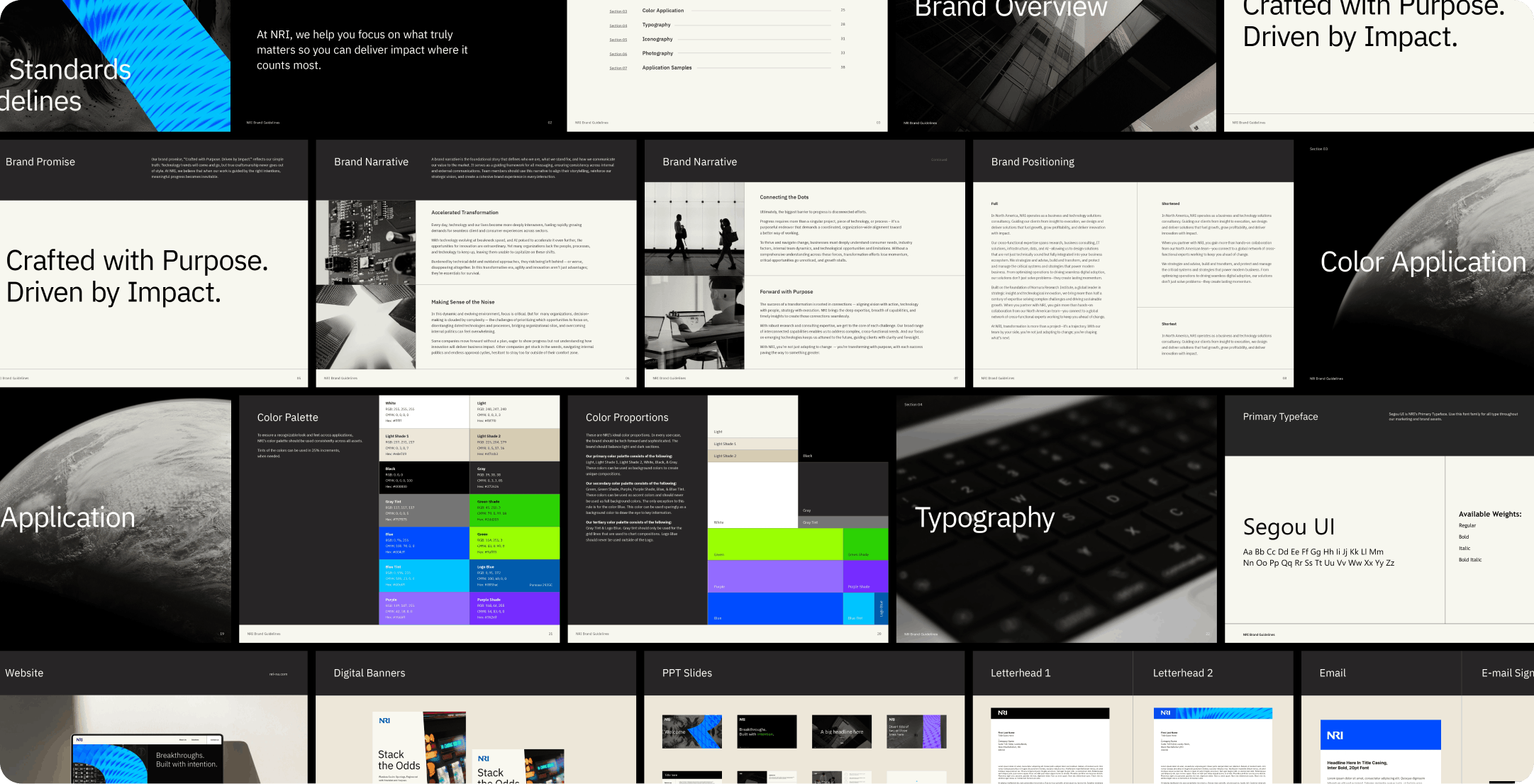
Japan has a word for a craftsman who dedicates their life to mastering a single discipline. That word is shokunin. Not just to be good at it. To perfect it. To treat the work itself as a form of respect.
America has a different relationship with time. Move fast. Iterate. Break things and build better ones. It is this restlessness that put a man on the moon, rewrote the rules of every industry it touched, and after fifty years of iteration, failure, and refinement, gave us AI.
Two cultures. Two relationships with time, craft, and progress. Both right. Both incomplete without the other.
NRI US is what happens when you stop choosing between them.
The precision and patience of Japan. The boldness and velocity of America. United in an organization that believes the best outcomes are not the fastest ones, or the most ambitious ones. They are the most intentional ones.
Every solution NRI builds is crafted to go beyond the immediate need. Designing with intention is what transforms a quick win into lasting change.
Technology trends will come and go. Platforms will rise and fall. The next breakthrough is already being built somewhere.
But true craftsmanship never goes out of style. And at NRI US, when work is guided by the right intentions, meaningful progress becomes inevitable.
NRI US. Crafted with Purpose. Driven by Impact.
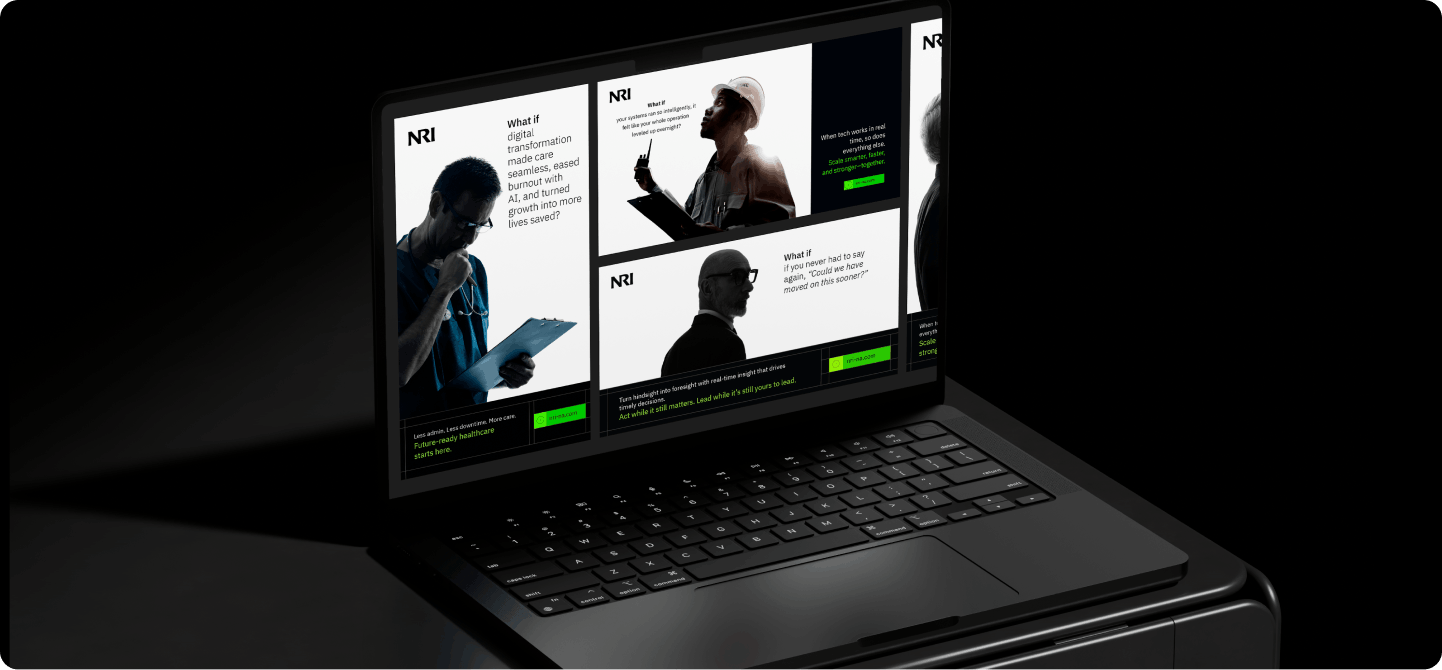
Rollout messaging was developed for three distinct audiences: clients, employees, and partners.
Each framing the unification story in terms of what it meant for them. A full seven-month roadmap was built covering brand discovery through visual identity, website, and compound campaign launch.
The Outcome
$120M in pipeline generated.
JumpSeat led the full rebrand and launched a 360 paid, owned, and earned ABM campaign over six months, targeting the NRI 2000.